

As AI agents become more capable and autonomous, the need to observe, audit, and optimize their tool usage has become mission-critical. Modern agents do much more than generate text—they call APIs, query databases, use calculators, retrieve documents, and interact with external systems. Without robust logging and observability, debugging and improving these workflows becomes impractical.
TLDR: Tool invocation logging platforms like LangSmith provide visibility into how AI agents call external tools, helping teams debug errors, track performance, and optimize behavior. Several strong alternatives offer comparable or complementary capabilities, including tracing frameworks, experiment tracking systems, and agent observability platforms. Choosing the right solution depends on your infrastructure, compliance requirements, and level of control needed. Below are six serious, production-ready tools for observing tool usage in modern AI agents.
Why Tool Invocation Logging Is Essential
When agents call tools, failures rarely happen in plain sight. Instead, issues appear downstream: incorrect outputs, hallucinated responses, infinite loops, or degraded performance. Without detailed trace logs, understanding what went wrong can require hours—or days—of investigation.
Effective tool invocation logging provides:
- Visibility: See every tool call, input, and output in sequence.
- Latency tracking: Measure performance bottlenecks.
- Error analysis: Identify retries, malformed inputs, and tool failures.
- Prompt attribution: Understand how prompts influenced tool decisions.
- Compliance auditing: Record tool usage for regulated environments.
Below are six tools that provide structured, production-ready logging and tracing for AI agents.
1. LangFuse
LangFuse is one of the most prominent observability platforms for large language model (LLM) applications. It offers deep tracing similar to LangSmith while emphasizing open-source flexibility and self-hosting.
Its core strengths include:
- Detailed trace visualization of agent steps
- Tool invocation breakdown with input and output inspection
- Latency and cost tracking
- User session replay
- Eval and feedback pipelines
LangFuse integrates well with LangChain, LlamaIndex, and custom agent orchestrators. For enterprises with strict compliance requirements, the ability to self-host is often decisive.
Teams building production agents with multiple tool calls frequently adopt LangFuse for its clear trace hierarchies and structured observability dashboard.
2. Helicone
Helicone focuses on LLM request logging, monitoring, and optimization. While not exclusively designed for agent tool tracing, it excels at capturing and analyzing API-level interactions across models and workflows.
Key capabilities include:
- Request and response logging
- Analytics for token usage and cost
- Error rate monitoring
- Prompt version comparison
- Experiment tracking
For teams whose tools rely heavily on LLM-based decision-making, Helicone provides clear observability at the model interaction layer. Combined with structured metadata, it can effectively trace tool decision patterns across large deployments.
Helicone is particularly useful for startups and scaling teams that need rapid insight into agent performance without building extensive internal monitoring infrastructure.
3. Arize Phoenix
Arize Phoenix extends beyond logging into evaluation and model analysis. Originally focused on ML observability, it now strongly supports LLM tracing and agent evaluation workflows.
It provides:
- Span-based tracing for agent workflows
- Embedding drift detection
- Root cause analysis tools
- LLM evaluation dashboards
- Production monitoring pipelines
For agents using retrieval-augmented generation (RAG), Phoenix is especially powerful. Teams can inspect what documents were retrieved, how they influenced outputs, and whether retrieval quality degrades over time.
Arize Phoenix is well-suited for enterprises that treat agent observability as part of broader AI governance and performance management strategy.
4. Weights & Biases (W&B) Prompts and Traces
Weights & Biases, long known for ML experiment tracking, now supports LLM tracing and monitoring via its Prompts and Weave capabilities.
While not purpose-built solely for agent tool tracking, W&B provides:
- Structured experiment tracking
- Prompt version control
- Tool call logging with trace hierarchies
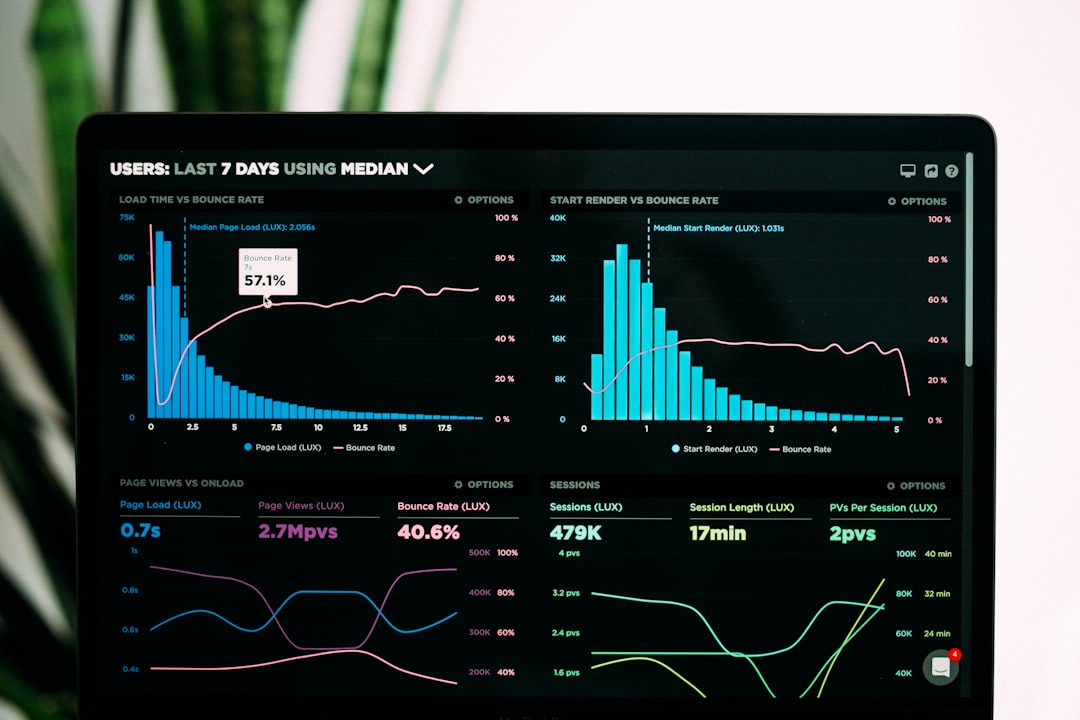
- Collaborative dashboards
- Performance comparisons across deployments
Its primary strength lies in combining experimentation with production observability. Teams running continuous agent optimization cycles benefit from tight integration between logging, evaluation, and experiment comparison.
W&B is particularly effective in research-intensive environments or companies that already use it for ML lifecycle management.
5. OpenTelemetry with Custom Instrumentation
For organizations requiring maximum flexibility, OpenTelemetry offers a vendor-neutral framework for distributed tracing and logging.
Rather than providing agent-specific dashboards out of the box, OpenTelemetry allows teams to:
- Instrument tool calls as trace spans
- Visualize execution graphs
- Integrate with observability platforms (Datadog, Grafana, etc.)
- Monitor cross-service tool interactions
- Customize telemetry pipelines
This approach is especially valuable for enterprises embedding AI agents into complex microservice architectures. Tool calls can be logged alongside database queries, internal services, and downstream APIs.
The tradeoff is increased implementation complexity. However, in regulated or large-scale environments, full observability integration may outweigh convenience.
6. Traceloop
Traceloop is specifically focused on LLM observability using OpenTelemetry standards. It bridges the gap between developer-friendly LLM tracing and production-grade monitoring infrastructure.
Notable features include:
- Automatic instrumentation for LLM frameworks
- Tool invocation tracing
- Evaluation pipelines
- Integration with existing observability stacks
- Cost and latency monitoring
Traceloop is compelling for teams that want structured LLM observability while leveraging established telemetry standards. It avoids vendor lock-in while still delivering agent-aware tracing capabilities.
How To Choose the Right Tool
Selecting a tool invocation logging platform depends on several organizational factors:
1. Level of Agent Complexity
- Single-step agents may only require API logging.
- Multi-step autonomous agents benefit from hierarchical trace visualization.
2. Compliance Requirements
- Regulated industries often prefer self-hosted or open-source solutions.
- Audit logs and trace retention policies become critical.
3. Existing Infrastructure
- Teams already using ML experiment tools may prefer W&B.
- Enterprises with observability pipelines may lean toward OpenTelemetry-based solutions.
4. Evaluation and Optimization Needs
- Platforms with built-in evaluation loops accelerate iteration.
- Trace feedback annotation improves agent refinement.
There is no universal answer. Early-stage teams often prioritize speed and ease of deployment. Mature organizations prioritize extensibility, auditability, and governance.
The Strategic Importance of Tool Observability
Agent-based systems are moving rapidly from experimentation into production. As they increasingly handle sensitive workflows—customer service automation, financial analysis, document processing, or operational decision support—the need for transparency grows.
Without structured logging:
- Errors remain opaque.
- Costs can spiral unexpectedly.
- Security risks increase.
- Performance bottlenecks go undetected.
Robust tool invocation tracing transforms agents from black boxes into measurable, debuggable systems. It creates accountability and enables systematic optimization instead of trial-and-error prompt adjustments.
In serious deployments, observability is not optional. It is foundational infrastructure.
Final Thoughts
LangSmith helped define the standard for structured agent observability, but it is far from the only solution. Tools such as LangFuse, Helicone, Arize Phoenix, Weights & Biases, OpenTelemetry, and Traceloop provide credible, production-grade alternatives depending on team needs.
As AI agents evolve toward higher autonomy, the ability to understand when, why, and how tools are invoked becomes indispensable. Organizations that invest early in comprehensive logging and tracing frameworks will move faster, debug more effectively, and deploy agent systems with greater confidence.
In short, observability is not merely a developer convenience. It is a strategic requirement for building trustworthy, high-performance AI agents at scale.